
Where the Dates Slept

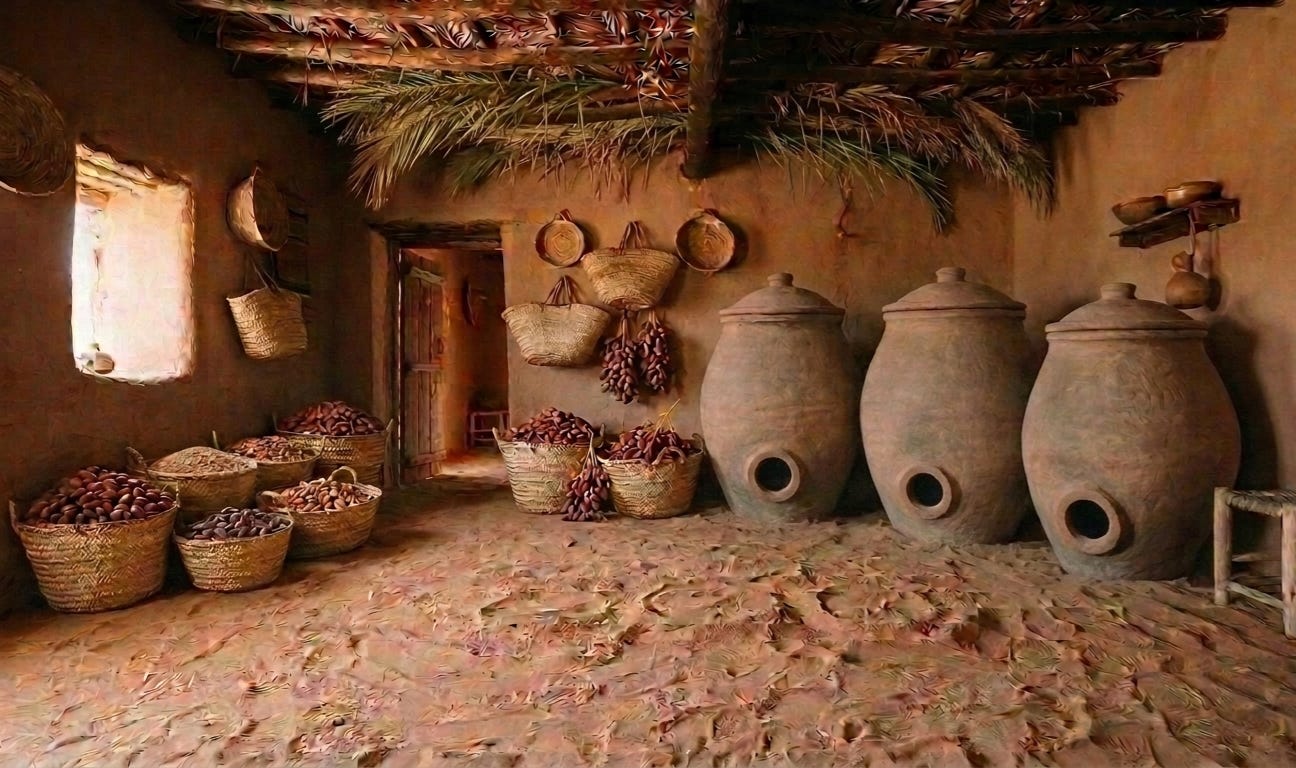
The clay drums were taller and wider than the standard ones. There were three of them, standing quietly in a humble clay room roofed with wooden beams and palm leaves. The floor was nothing but desert sand. It wasn't an oversight—it was by design. The drums needed to breathe, and the warmth rising from the earth helped preserve what they held.
My maternal grandfather built many of these clay drums to store the harvest from his date farm, but these three stood inside the main house, as though they belonged as much to the family as they did to the harvest.
When the dates were picked, they were poured into the drums until they were full. Clay lids were then gently pressed into place, sealing them, and after that, everyone simply let nature do its work.
Near the bottom of each drum, a small opening had been cut—just wide enough for a hand to reach through and pull out a handful of dates whenever they were needed.
Our harvest was unlike any other. The dates were long and finger-shaped, caramel-coloured, and wonderfully crunchy.
As a child, I would tiptoe into the storage room, slip my hand through the little opening, and eat until I was full—until my molars ached from chewing one sweet date after another.
Later, when I refused another meal, someone would ask, "Why aren't you hungry?" And my late grandfather would smile knowingly and say, "Because she's been snacking on the dates like a little mouse."
The clay drums carried more than dates.