
Marked Prey

Feb 2015
C lived in the heart of the city. I lived in its suburbs, where the wind rustled through the trees and the ocean whispered against the shore. Thirty minutes separated our worlds, but they felt entirely different—hers loud, bright, and restless; mine quiet, green, and patient.
I was leaving on a short trip, and she asked me to spend a day with her before I went. I agreed. The next evening, I packed a small case and walked to her apartment. The city hummed around us, neon lights reflecting off wet pavements, people hurrying home or out for the night. We dressed carefully, laughing at our choices, and stepped into the cool air.
Our destination was a beachfront grill bar. The road twisted through quiet neighbourhoods before opening onto sand and waves. The bar glowed with light and music. Candles flickered on each table, and the smell of grilled food mingled with the ocean breeze. We found a table, ordered food, and shared laughter and stories. Music rose and fell around us, gentle and alive.
We met some colleagues, shared jokes, and danced a little. Time passed almost unnoticed. Midnight approached, and my flight loomed. Six hours remained. I suggested we head back to her place to rest before the journey.
The bar was tucked away, half a kilometer from the main road, surrounded by darkness. As we stepped out, a security guard appeared. He was tall, fully armed, calm but watchful. “This area has no light,” he said. “In the dark, bad men wait. The main road is bright—maybe you’ll find a taxi there.” He offered to walk us to the main road. We accepted gratefully, letting him guide us through the dark path. When we reached the brightly lit main road, we thanked him and tipped him before he left. His presence had made the walk feel safer, even for a few minutes.
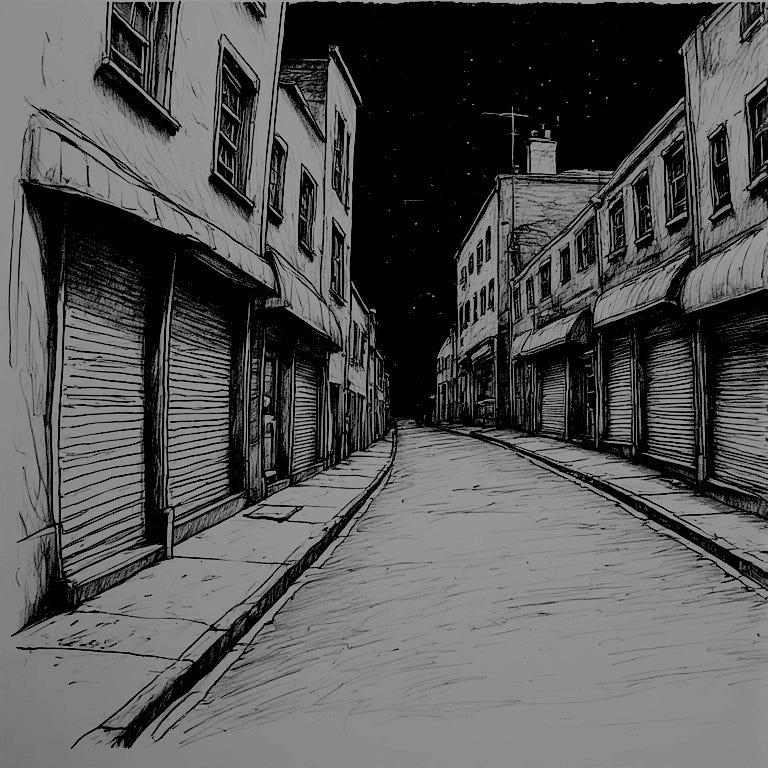
The main road was lit but deserted. Shops were closed. We could see C’s apartment a few blocks away. We decided to walk. The night was cool, almost soothing. Streetlights cast long shadows, and the city felt like it was holding its breath. We talked quietly about the evening—the music, the food, office dramas, small jokes.
Then we saw them. Four men, moving across the road toward us. Whistles cut the calm. C’s eyes met mine. Fear froze my words. I couldn’t speak. We didn’t hesitate. We ran.
Her apartment was two streets away. She screamed. My throat locked. My skin turned cold. My heart hammered, irregular, desperate to supply blood to my legs. I grabbed a brick from the road—small, useless, but something—and kept running. The men chased us, calling insults, their footsteps echoing in the empty street.
We reached her compound. One guard stood by the gate, armed and alert. He fired a shot into the air. The men froze. The gate separated us from them. Finally, we were safe, though my body still trembled.
C cursed them loudly, and it drew me back from the edge of panic. She hugged me, heart racing, fear tangible. “You’re really cold,” she said. “Are you okay?” I nodded, though my mind clung to their faces—the predatory shapes in the dark.
We stayed in the garden, watching as the men lingered outside. The guards finally chased them away. When we returned to her flat, sleep was impossible. I spent five hours in the living room, knife in hand, eyes fixed on her door. At five in the morning, I gave her my flat key and insisted she stay there. She drove me to the airport.
The flight passed in a haze. My body was present, but my mind replayed every moment: the chase, the screams, the faces of the men who had decided that night that we were prey.
Even days later, every shadow on the street made me flinch. Every sound in the dark felt too close, too deliberate. I double-checked locks, glanced over my shoulder constantly, and felt my heart skip at the slightest noise. That night had changed something inside me. The city’s calm no longer felt safe, the suburbs’ wind no longer comforting. The memory lingered, a cold weight pressing on every quiet moment, reminding me how close we had come to losing everything.
Your story grips the reader from the very first step on the quiet street, blending tension, fear, and raw human instinct. The way you describe the chase, the city’s shadows, and the guards’ intervention makes danger feel immediate and intimate. I could feel the adrenaline, the panic, and the relief washing over you both. This is a powerful reminder of how fragile safety can be, and how courage can appear when it is needed most. Your narrative lingers long after the last line.
This shouldn’t happen. Thank you for making it literature so women can find each other’s voices. Maybe our voices don’t change anything. But it is better to hear one voice than not hearing any? Yes. Society needs to change its men and their upbringing but that’s so far away… if almost every single woman knows this and none of us even tell about it … wouldn’t that be worse?