

Beyond the Black Sheep

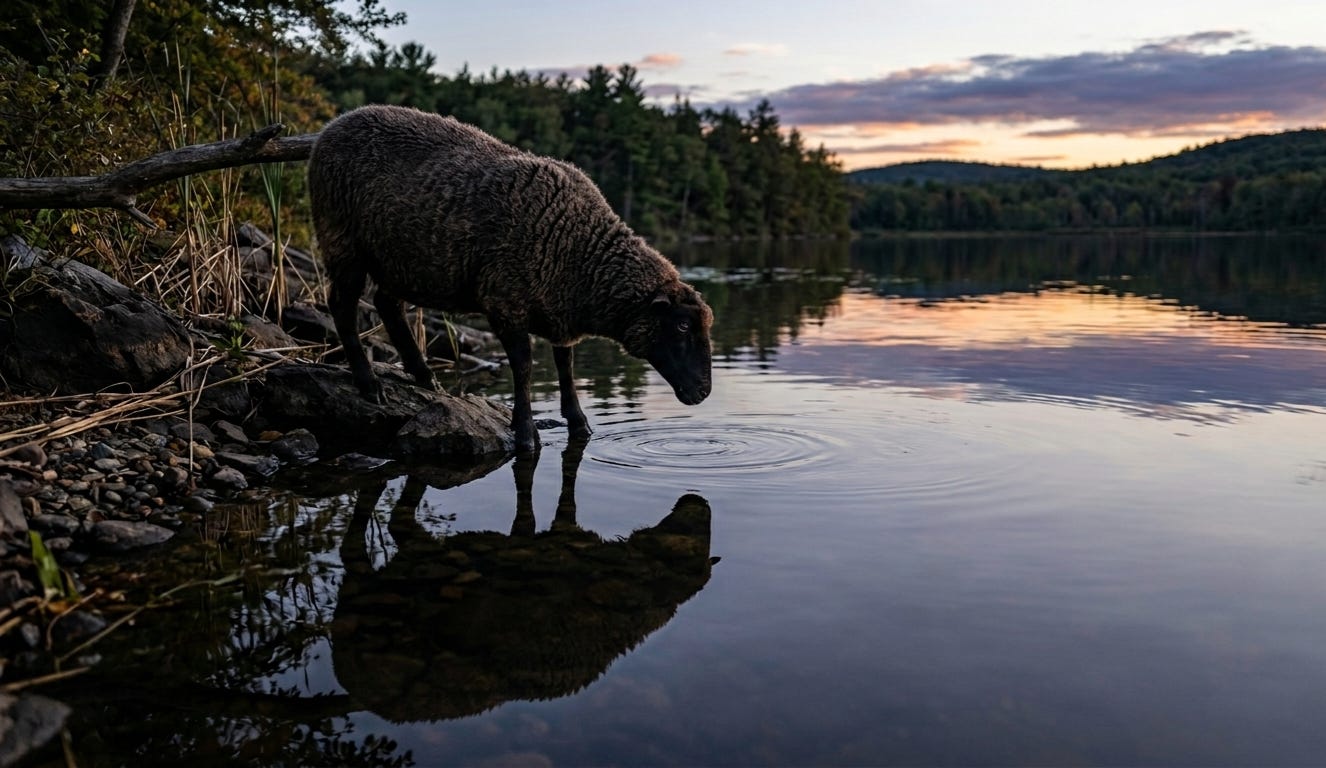
"You're scapegoated. You're the black sheep."
That was the language I was given.
For a while, I accepted it. It named something real, but never everything. It explained the role I occupied, not how I came to occupy it.
Still, something felt incomplete. My mind kept circling back, searching for the missing pieces of a puzzle that language alone couldn't assemble.
Back then, language was limited. Naming was forbidden. There were things everyone seemed to know but no one was willing to say aloud. So I filled the silence with questions.
What caused the rupture?
What could I have done that was so terrible it made what happened seem possible—perhaps even justified?
I eventually accepted that some parents love some children differently, even though they all belong to them. But that never answered the question.
How does preference become deprivation?
How does distance become disdain?
Sometimes I wonder if the disdain had very little to do with me, and everything to do with what I reflected back.
Biology shuffled forty-six chromosomes and made me from both. Out of everyone, I am the one who resembles them both most closely.
Could that have been part of it?
Could it be that looking at me meant looking into a mirror they never wanted to face? That fearing the reflection became easier than confronting what it reflected?
Perhaps what looked like my destruction was someone else's, carried through me.
I know answers cannot mend wounds. Understanding does not rewrite memory, and explanation does not erase pain. But the mind resists unfinished patterns. It keeps reaching for closure, even when none exists.
So I keep wondering.
Because whenever I tell the story of my past, it feels almost fictional—not because it didn't happen, but because it contradicts the mythology we are taught to mistake for truth. The stories we inherit insist that family is synonymous with safety, that love naturally follows blood, that parents always know how to love their children.
Reality has a way of refusing those stories.
Maybe that is why I keep searching for another explanation: one that allows the world to make sense again.
And perhaps one day I'll stop wondering.
Not because I'll finally have the answers, but because I'll have made peace with the possibility that some stories remain unfinished, and that not every silence is waiting to be translated.
This is a great piece, Mirage! I was always called "too sensitive". In hindsight, they didn't like I had needs.
🫂🫂🫂❤️🩹❤️🩹❤️🩹
Whatever "reasons" they have for mistreating you excuses nothing, dear.
You were a child who deserved to grow up with love, stability and safety. Not hurt and abuse.
The shame is theirs. They are the broken ones, not you. They passed their wounds down and you refused to continue that dreadful chain. You broke the cycle. You're stronger than they'll ever be.
And we're all so proud of you.